

 ABOUT Vardhman
 MEDIA CENTER
 Insights
 Work With Us
 Oswal Group
 Projects
 Commercial Spaces
 Bespoke Residences
 Signature Offices








- Enquire
-
Call Now
- Corporate Office +91-629-338-8888
- Customer Support +91-781-432-9002
- Contact us
Documents Required for Residential Real Estate Investment in India
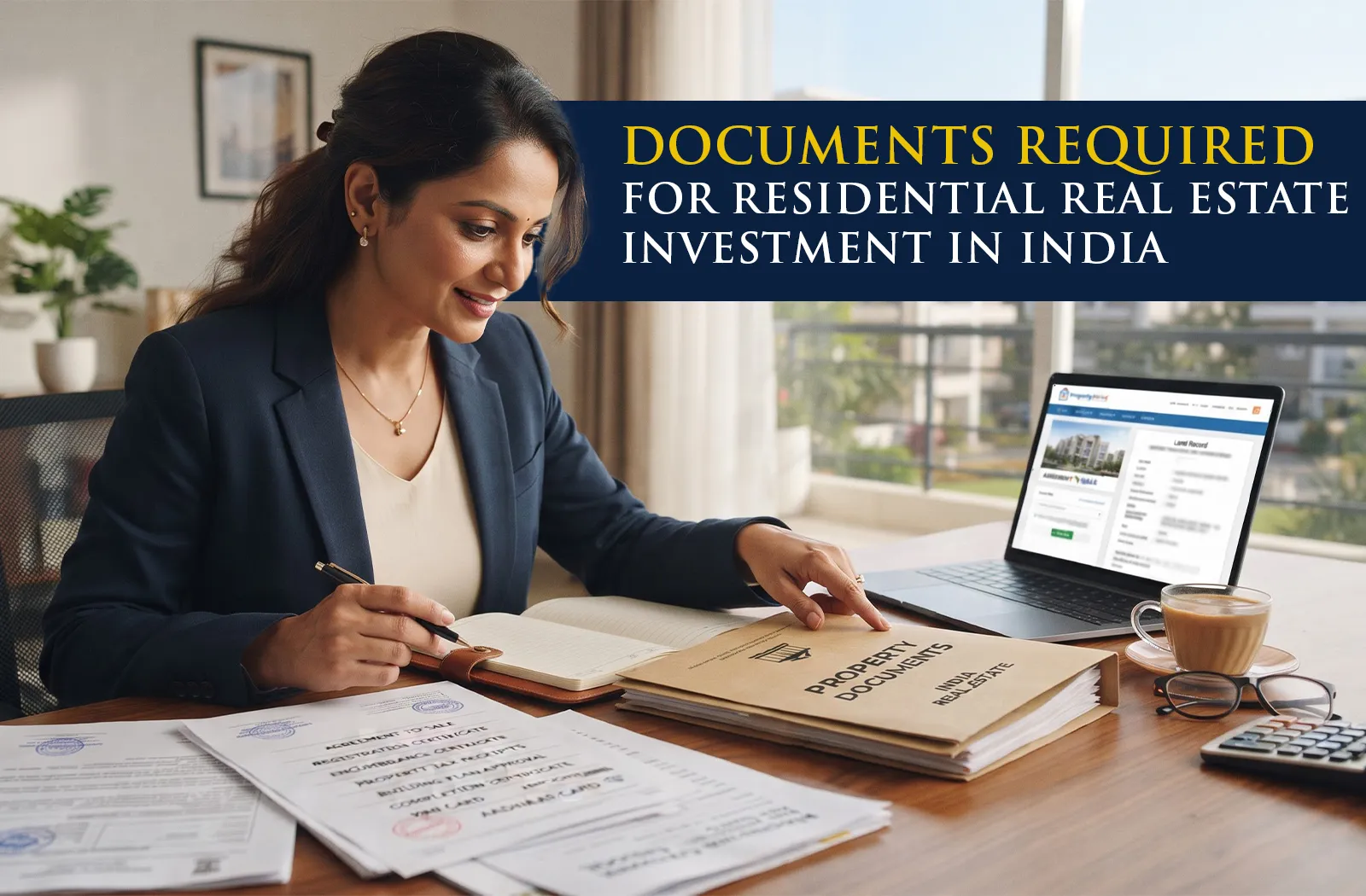
Ask anyone who's actually bought a house and they'll tell you the fun part ends the moment the paperwork shows up. One day you're picturing where the sofa goes; the next you're squinting at terms like “encumbrance certificate” and ‘khata,” wondering if you're supposed to already know what these mean.
You're not. Most people don't, until they're forced to.
But here's the part that actually matters. Getting your paperwork right is arguably the single biggest factor in whether your residential real estate investment turns out fine or turns into a years-long headache. And unfortunately, most people only learn this the hard way, after a dispute crops up, not before. So let's go through what you actually need to check, without the jargon overload.
Why This Bit Deserves More Attention Than It Gets
A property can tick every box you care about, like a good area, decent price, and nice view from the balcony, and still cause you trouble later if something in the paperwork is off. That's the uncomfortable truth nobody tells you at the site visit.
Documentation isn't the boring formality between "I like this place" and "I own this place." It's genuinely the thing that decides whether your residential real estate investment is safe or shaky. And the reason so many buyers skip corners here isn't carelessness; it's excitement. You've found the place, you want to move fast, and suddenly checking ownership history feels like a waste of good momentum.
It isn't. It's the part that protects you two, five, ten years down the line.
What You Actually Need to Check
Strip away the legal jargon, and every residential deal in India basically comes down to the same core set of documents.
- Title deed – proves the seller actually has the right to sell you this property, not just possession of it
- Encumbrance certificate – tells you if there's a loan, mortgage, or legal mess already attached to the property
- Sale deed – the paper that legally hands ownership over to you once the deal closes
- Property tax receipts shows - whether taxes have actually been paid, so you're not inheriting someone else's unpaid bill
- Approved building plan – confirms what's built matches what was actually sanctioned, no unauthorized extra floor situations
- Occupancy certificate – confirms the place is legally fit to live in, not just physically standing
- RERA registration – applies to most newer projects, and is honestly worth checking even when it's not strictly required
- Khata or mutation certificate – shows the property is correctly recorded under the current owner's name at the municipal level
Miss even one of these and you're essentially buying blind on that front. Together, they're what turns a random transaction into a genuine property investment you can trust.
The Stuff People Forget to Ask About
Even buyers who think they're being thorough tend to miss a few smaller things.
- Nobody asks for the encumbrance certificate until much later than they should.
- A tidy-looking sale agreement often gets mistaken for proof of clean ownership, when it's really just paperwork about the deal, not the history.
- Agricultural land restrictions get overlooked entirely, and depending on the state, that can quietly limit what you're even allowed to build.
- Society or builder NOCs get assumed to exist rather than actually being confirmed on paper
None of these scream disaster on their own. But stack a couple together and you've got the exact recipe for the kind of dispute that eats years of your life and money you didn't budget for.
How to Actually Handle This Without a Law Degree
You don't need to be a lawyer. You just need a bit of a system.
- Get original documents from the seller or developer; photocopies tell you nothing useful.
- Check the ownership history yourself at the local sub registrar's office
- Make sure there's no loan, dues, or dispute quietly attached to the residential property
- Confirm the RERA registration status if it's a newer or under construction project
- If anything feels off or doesn't quite add up, get a property lawyer involved before signing anything.
This isn't about being paranoid. It's just what separates a smooth real estate investment from one that eats up your weekends in court a few years later.
Why Rushing This Part Almost Never Pays Off
Most people who skip steps here aren't lazy; they're just excited. And that's exactly the problem. The excitement is what makes you want to sign quickly, and signing quickly is exactly when mistakes slip through. A few extra days spent verifying paperwork properly is nothing compared to years of dealing with a legal mess. Any serious residential real estate investment deserves that patience, no matter how good the deal looks on day one.
If you're looking around Ludhiana, both Vardhman Park and Vardhman City Centre are fully RERA compliant, which honestly takes a good chunk of this stress off your plate. Our legal checklist for buying commercial property covers a similar due diligence angle if you're curious, and you can browse our full project portfolio while you weigh your options. For anyone who wants to double check things independently, the Punjab RERA portal lets you verify a project's registration directly.
CTA: Thinking about your next residential real estate investment? Our team can walk you through every document and legal step so you're not figuring it out alone. Connect with Vardhman Amrante today.
Frequently Asked Questions
Q1. What's the one document I really shouldn't skip checking?
The title deed and encumbrance certificate, honestly. Between the two, you'll know whether the seller can legally sell and whether the property has any hidden loans or claims attached before you commit to a residential real estate investment.
Q2. Does RERA registration actually matter that much?
It does. It's essentially your safety net as a buyer. Most new residential projects are required to register, and skipping this check is one of the more common regrets people mention after a rough property investment experience.
Q3. What if I just skip the property tax records?
You could, but you probably shouldn't. Unpaid dues have a way of becoming the new owner's problem, so it's worth the ten minutes it takes to check before finalizing a residential property deal.
Q4. Is hiring a lawyer really necessary for this?
Not strictly, no. But for anything beyond a small purchase, having someone qualified review your documents is cheap insurance against a very expensive mistake in your residential real estate investment.
Q5. What exactly does an encumbrance certificate tell me?
It shows whether the property has any pending loans, mortgages, or legal disputes tied to it. It's usually one of the first things worth pulling before moving ahead with any real estate investment.
Q6. How long does all this verification usually take?
Anywhere from a few days to a few weeks, honestly, depending on how far back you need to trace ownership history through municipal records.
Recent Blogs

Documents Required for Residential Real Estate Investment in India
Read More
Commercial Real Estate Investment: Why Waiting for the
Read More
Struggling to Find Good Shopping Places in Ludhiana? Read This First
Read More
What Makes a Mall Iconic? Ludhiana Is About to Find Out
Read More
Why Some Residential Investments Double in Value While Others Stay Flat (The Truth Nobody Tells You)
Read More
Commercial Real Estate Investment: The Secret Way Investors Spot Million-Dollar Hotspots Before Anyone Else Does
Read More
Why Some Residential Plots in Ludhiana Double in Value (While Others Stay Stuck)
Read More
âś–